

Код товара: 6270722778
Новинка
Новинка
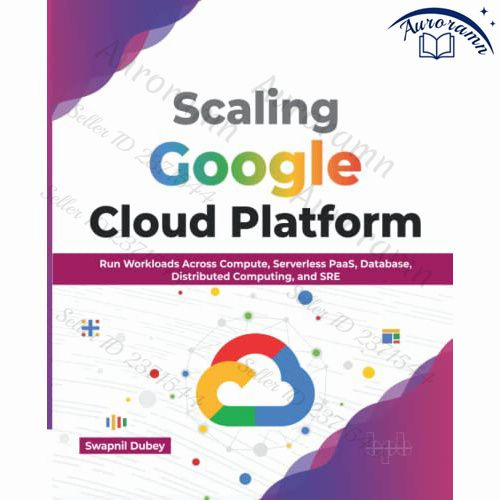
Scaling google Cloud Platform: Run Workloads Across Compute, Serverless PaaS, Database, Distributed Computing, and SRE
Тип книги:
Печатная книга
О товаре
Перейти к описанию
Автор на обложке
0
Тип бумаги в книге
Мелованная матовая
Тип обложки
Мягкая обложка
Тип книги
Печатная книга
Язык издания
Английский
О книге
Managing Real-world Production-grade Challenges at Scale
Key Features
● Built for GCP professionals and Cloud enthusiasts with cloud-agnostic tactics.
● Exhaustive coverage of automatic, manual, and p
2 980 ₽
Магазин
180 подписчиков
Auroramn
Перейти
4.7
Чат
Заказы
2.9 K
О магазине
Часто задаваемые вопросы
Описание
Managing Real-world Production-grade Challenges at Scale
Key Features
● Built for GCP professionals and Cloud enthusiasts with cloud-agnostic tactics.
● Exhaustive coverage of automatic, manual, and predictive scaling and specialized strategies.
● Every concept is pragmatized with real-time production scenarios derived from prominent technologists.
‘Scaling google Cloud Platform’ equips developers with the know-how to get the most out of its services in storage, serverless computing, networking, infrastructure monitoring, and other IT tasks. This book explains the fundamentals of cloud scaling, including Cloud Elasticity, creating cloud workloads, and selecting the appropriate cloud scaling key performance indicators (KPIs).
The book explains the sections of GCP resources that can be scaled, as well as their architecture and internals, and best practices for using these components in an operational setting in detail. The book also discusses scaling techniques such as predictive scaling, auto-scaling, and manual scaling. This book includes real-world examples illustrating how to scale many google Cloud services, including the compute engine, GKE, VMWare Engine, Cloud Function, Cloud Run, App Engine, BigTable, Spanner, Composer, Dataproc, and Dataflow.
At the end of the book, the author delves into the two most common architectures—Microservices and Bigdata to examine how you can perform reliability engineering for them on GCP.
What you will learn
● Learn workload migration strategy and execution, both within and between clouds.
● Explore methods of increasing google Cloud capacity for running VMware Engine and containerized applications.
● Scaling up and down methods include manual, predictive, and automatic approaches.
● Increase the capacity of your Dataproc cluster to handle your big data computing needs.
● Learn google Dataflow’s scalability considerations for large-scale installations.
● Explore google Composer 2 and scale up your Cloud Spanner instances.
● Learn to set up Cloud functions and Cloud run.
● Discuss general SRE procedures on microservices and big data.
Who this book is for
This book is designed for Cloud professionals, software developers, architects, DevOps team, and engineering managers to explain scaling strategies for GCP services and assumes readers know GCP basics.
#профессиональнаялитература
- Артикул
- 6270722778
- Автор на обложке
- 0
- Тип бумаги в книге
- Мелованная матовая
- Тип обложки
- Мягкая обложка
- Тип книги
- Печатная книга
- Язык издания
- Английский
- Количество страниц
- 358
- Размеры, мм
- 251*179*25
- Вес товара, г
- 690
- ISBN
- 9787187454598
- Сохранность книги
- Удовлетворительная
Подборки товаров в категории Научная и научно-популярная литература
Отзывы о товаре
0
Scaling google Cloud Platform: Run Workloads Across Compute, Serverless PaaS, Database, Distributed Computing, and SRE
Рейтинга пока нет. Он формируется на основе актуальных отзывов на заказанные и оплаченные товары
Как правильно задавать вопросы?
Будьте вежливы и спрашивайте о товаре, на карточке которого вы находитесь
Если вы обнаружили ошибку в описанием товара, воспользуйтесь функцией
Как отвечать на вопросы?
Отвечать на вопросы могут клиенты, купившие товар, и официальные представители.
Выбрать «Лучший ответ» может только автор вопроса, если именно этот ответ ему помог.