

Код товара: 5790738213
Новинка
Новинка
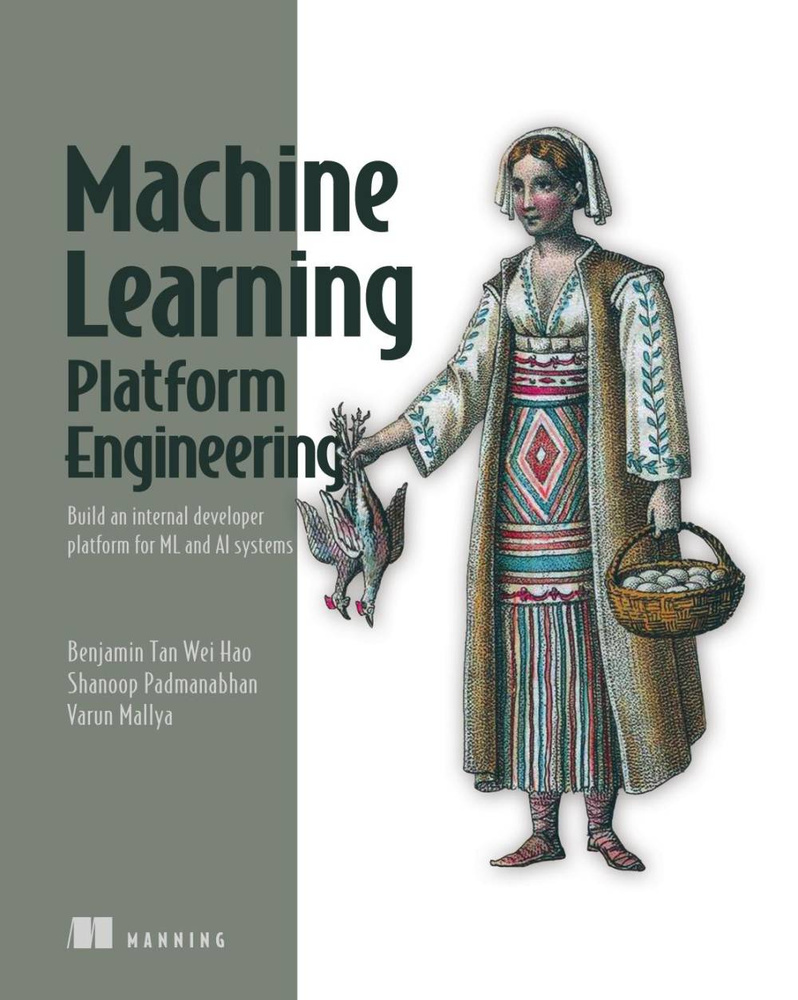
Machine Learning Platform Engineering: Build an internal developer platform for ML and AI systems
Тип книги:
Печатная книга
О товаре
Перейти к описанию
Автор на обложке
Benjamin Tan Wei Hao, Shanoop Padmanabhan, Varun Mallya
Год выпуска
2026
Тип бумаги в книге
Офсетная
Тип обложки
Мягкая обложка
Тип книги
Печатная книга
О книге
Most machine learning projects never make it to production. The challenge isn’t building models—it’s deploying them reliably, monitoring their performance, and maintaining them at scale. AI and ML sys
2 788 ₽ 5 035 ₽
Магазин
Подписаться
CMFQY
Перейти4.7
Чат
Заказы
2 K
О магазине
Часто задаваемые вопросы
Другие предложения от продавцов на Ozon Россия
Описание
Most machine learning projects never make it to production. The challenge isn’t building models—it’s deploying them reliably, monitoring their performance, and maintaining them at scale. AI and ML systems have a lot of moving parts, from language libraries and application frameworks, to workflow and deployment infrastructure, to LLMs and other advanced models. A well-designed internal development platform (IDP) gives developers a defined set of tools and guidelines that accelerate the dev process, improving consistency, security, and developer experience.
This book demonstrates how to build an effective IDP for ML and AI applications. Each chapter illuminates a vital part of the ML workflow, including setting up orchestration pipelines, selecting models, allocating resources for training, inference, and serving, and more. As you go, you’ll create a versatile modern platform using open source tools like Kubeflow, MLFlow, BentoML, Evidently, Feast, and LangChain.
The book has four parts, covering 13 chapters. Part 1 (Chap. 1~3) explains what MLOps entails and how to build the infrastructure foundation for ML systems. Part 2 (Chap. 4~6) focuses on building the core platform capabilities that transform ad hoc ML processes into production-ready systems. Part 3 (Chap. 7~11) demonstrates MLOps principles in action through two complete, real-world projects. Finally, Part 4 (Chap. 12, 13) extends MLOps to generative AI through LLMOps, building production RAG systems with vector databases, prompt management, and safety controls, and then hardening them for enterprise deployment with testing, guardrails, and cost optimization.
It is for data scientists and software engineers who want to move beyond Jupyter Notebooks to production ML systems.
This book demonstrates how to build an effective IDP for ML and AI applications. Each chapter illuminates a vital part of the ML workflow, including setting up orchestration pipelines, selecting models, allocating resources for training, inference, and serving, and more. As you go, you’ll create a versatile modern platform using open source tools like Kubeflow, MLFlow, BentoML, Evidently, Feast, and LangChain.
The book has four parts, covering 13 chapters. Part 1 (Chap. 1~3) explains what MLOps entails and how to build the infrastructure foundation for ML systems. Part 2 (Chap. 4~6) focuses on building the core platform capabilities that transform ad hoc ML processes into production-ready systems. Part 3 (Chap. 7~11) demonstrates MLOps principles in action through two complete, real-world projects. Finally, Part 4 (Chap. 12, 13) extends MLOps to generative AI through LLMOps, building production RAG systems with vector databases, prompt management, and safety controls, and then hardening them for enterprise deployment with testing, guardrails, and cost optimization.
It is for data scientists and software engineers who want to move beyond Jupyter Notebooks to production ML systems.
- Артикул
- 5790738213
- Автор на обложке
- Benjamin Tan Wei Hao, Shanoop Padmanabhan, Varun Mallya
- Год выпуска
- 2026
- Тип бумаги в книге
- Офсетная
- Тип обложки
- Мягкая обложка
- Тип книги
- Печатная книга
- Язык издания
- Английский
- Количество страниц
- 504
- Размеры, мм
- 16.5CM*24.0CM
- ISBN
- 9781633437333
- Сохранность книги
- Очень хорошая
Подборки товаров в категории Книги: Компьютерные технологии
Отзывы о товаре
0
Machine Learning Platform Engineering: Build an internal developer platform for ML and AI systems
Рейтинга пока нет. Он формируется на основе актуальных отзывов на заказанные и оплаченные товары
Как правильно задавать вопросы?
Будьте вежливы и спрашивайте о товаре, на карточке которого вы находитесь
Если вы обнаружили ошибку в описанием товара, воспользуйтесь функцией
Как отвечать на вопросы?
Отвечать на вопросы могут клиенты, купившие товар, и официальные представители.
Выбрать «Лучший ответ» может только автор вопроса, если именно этот ответ ему помог.